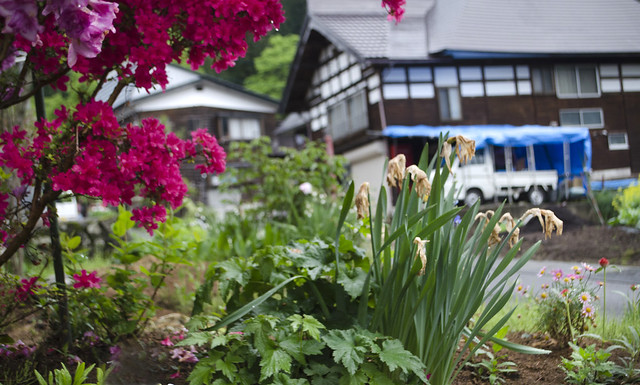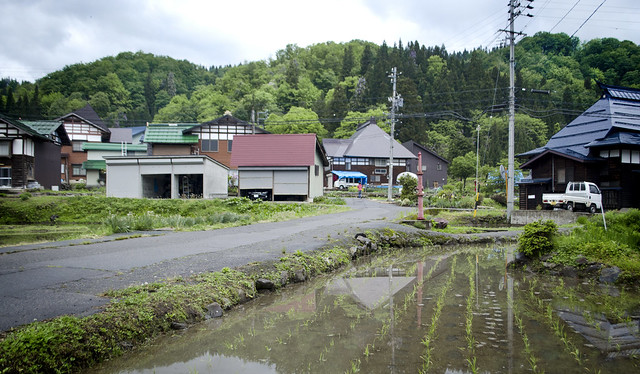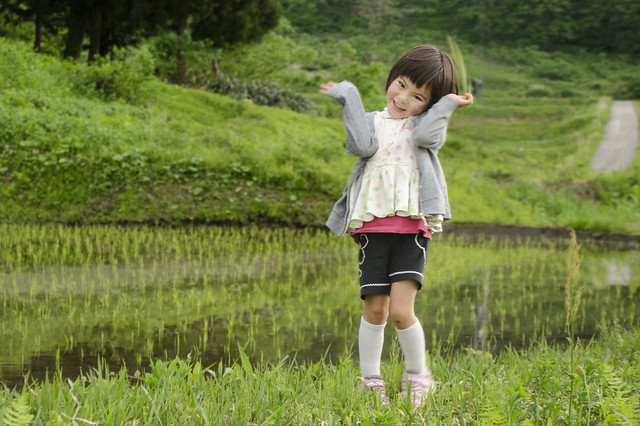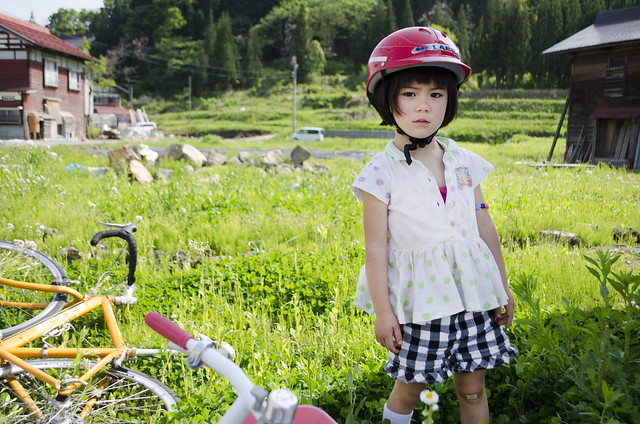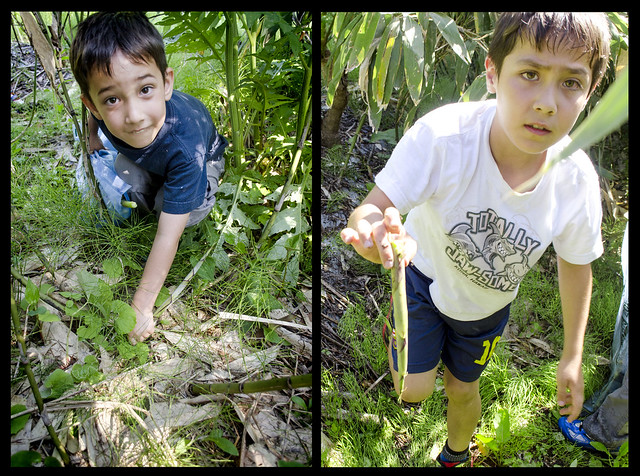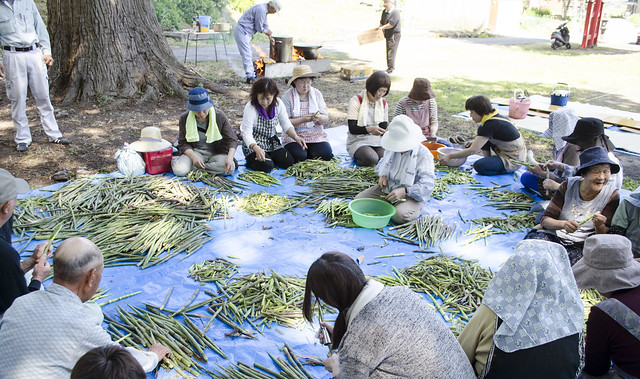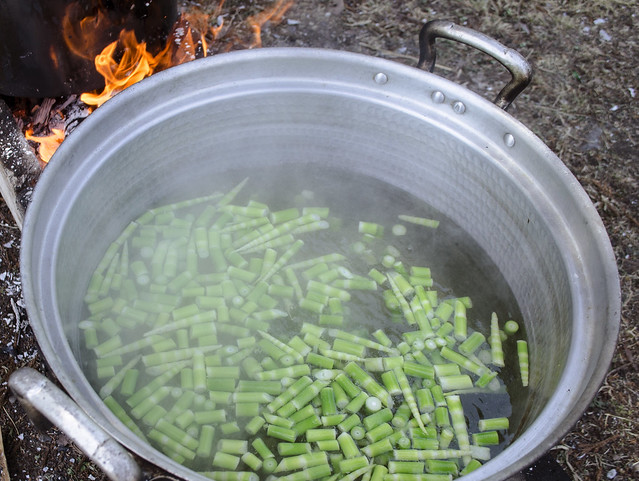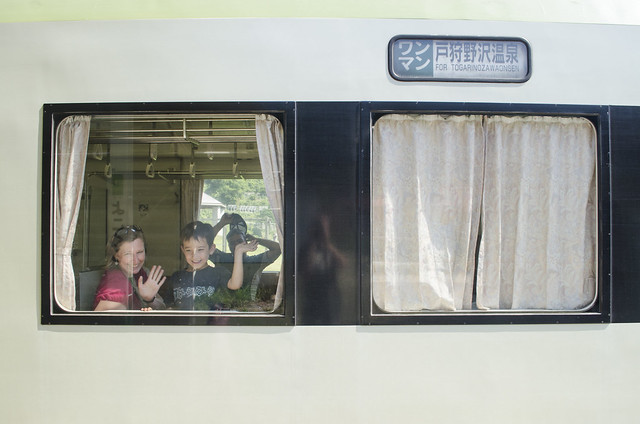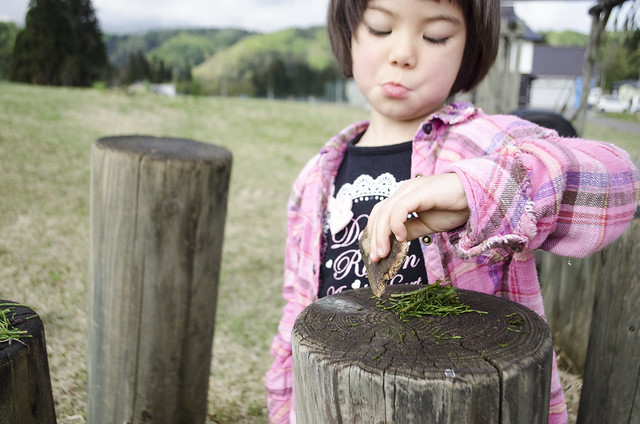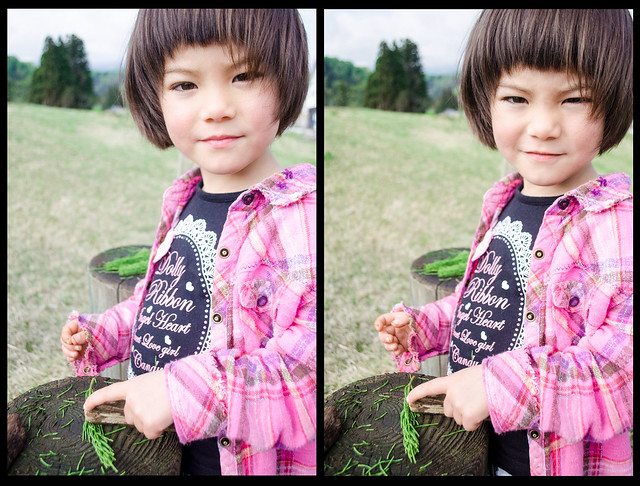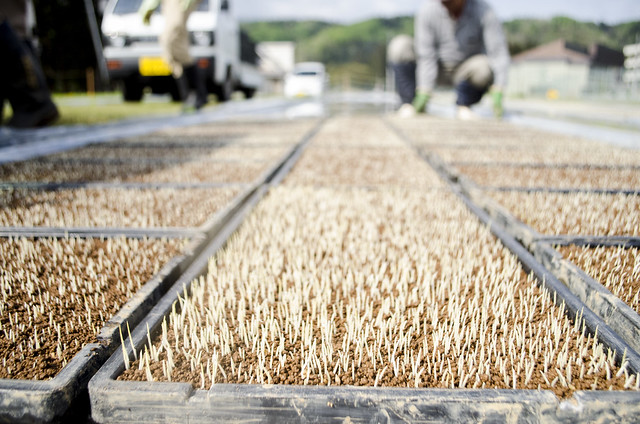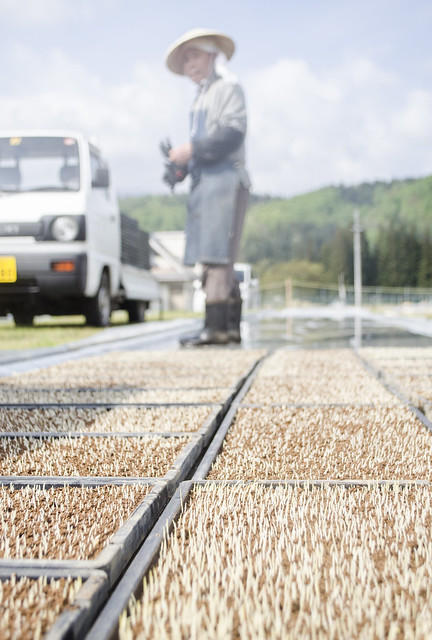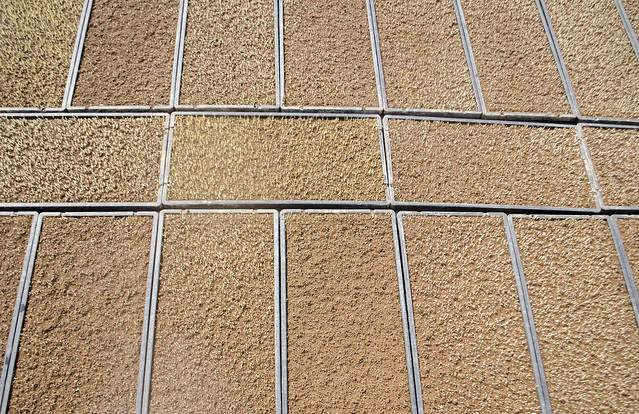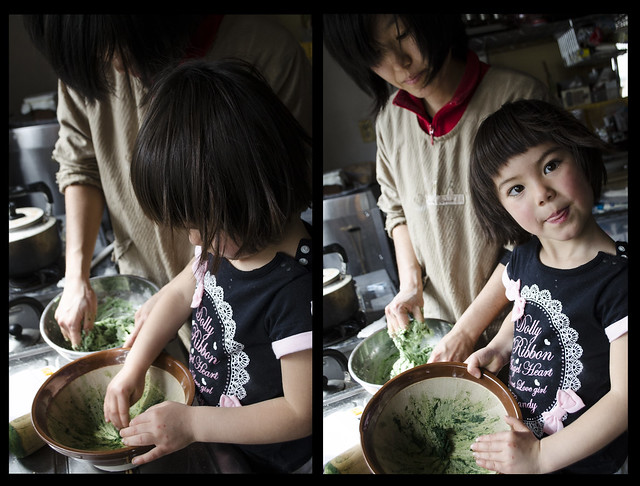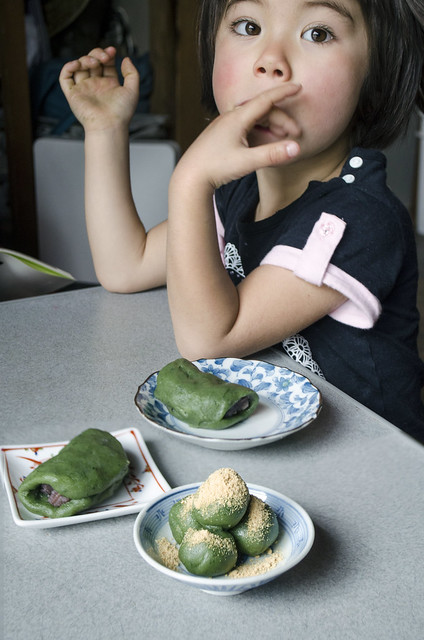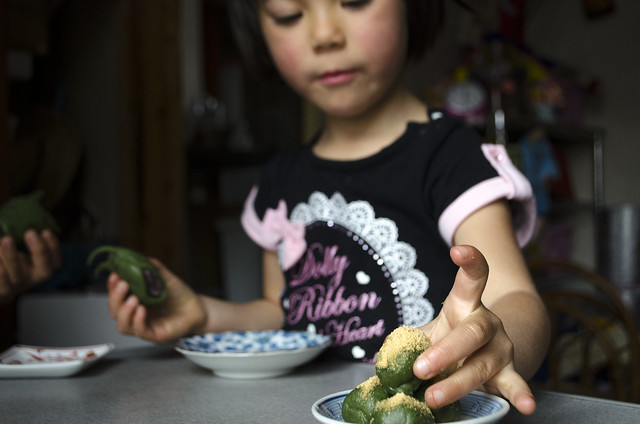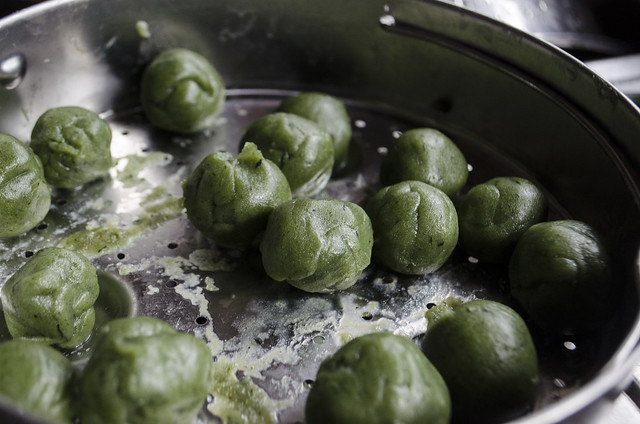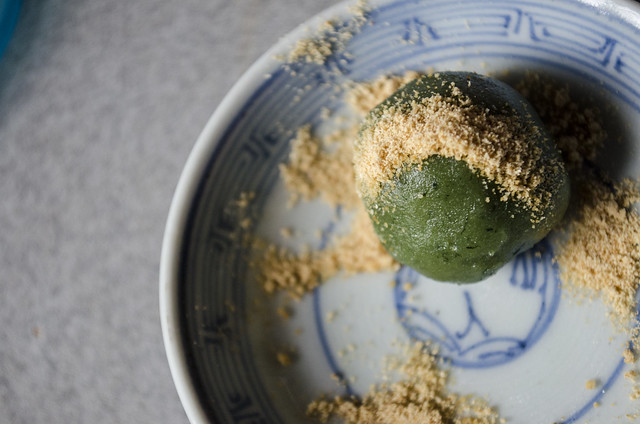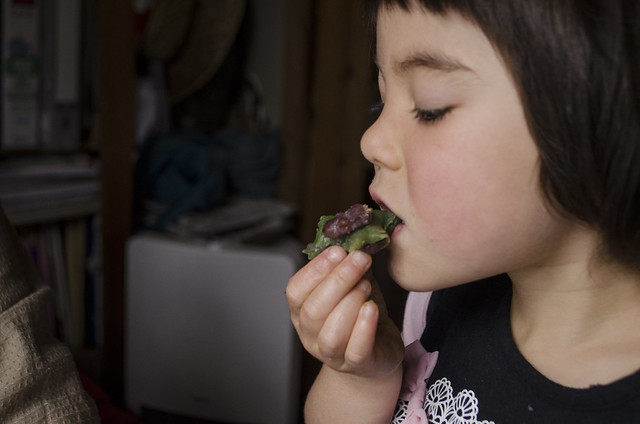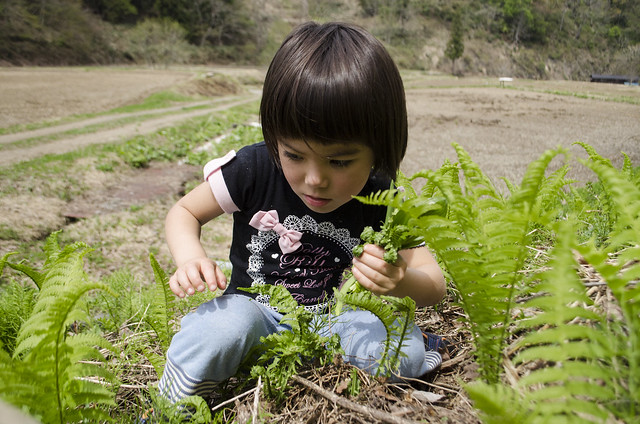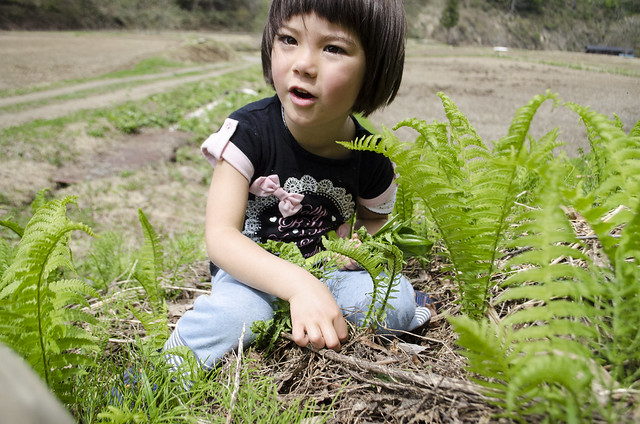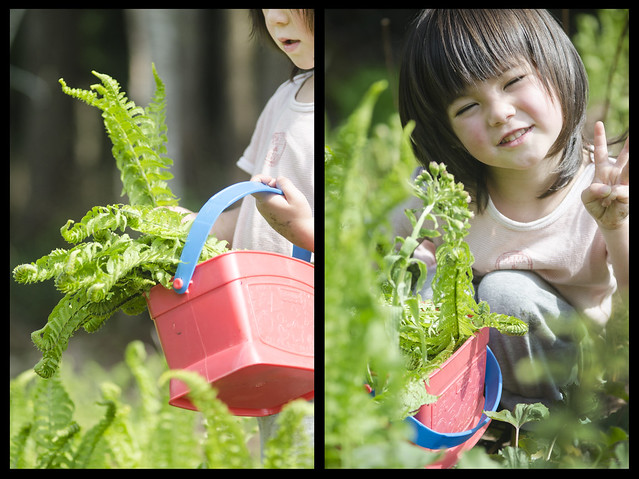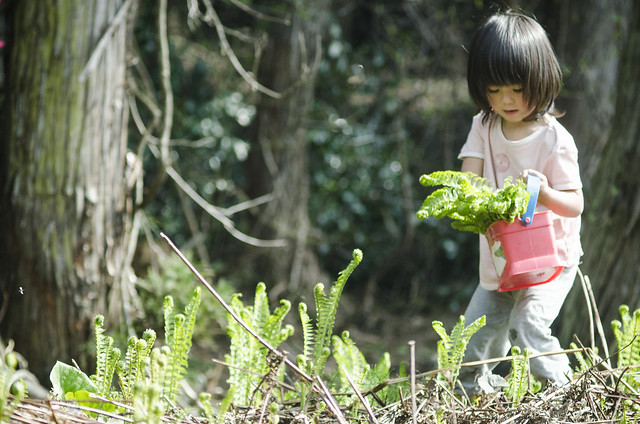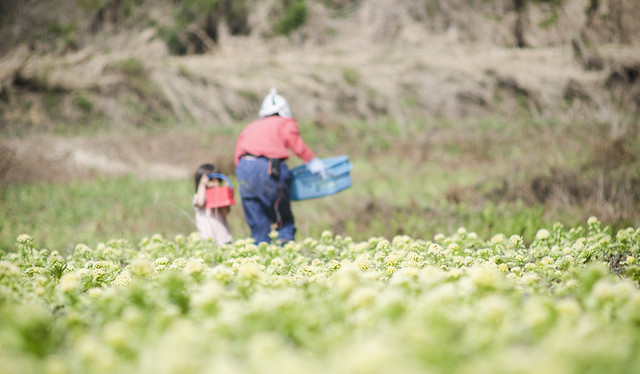
It is rare to find tsukushi horsetail this late with the pollen still intact (which is when they are good for the eatin’). Because the snow melts slower a bit up the mountain, today was the perfect day for perfect tsukushi.
Nabekura kogen
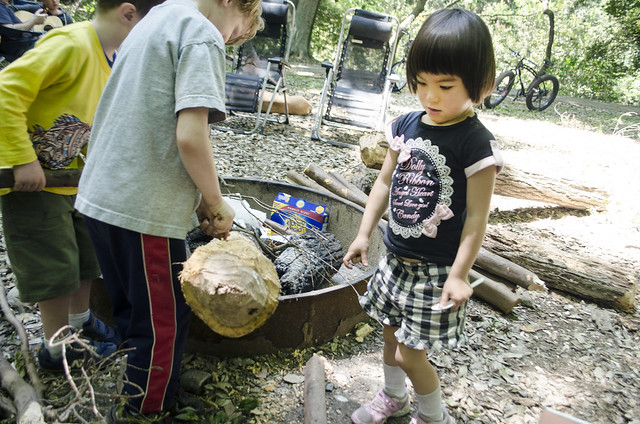
Took a little day-trip to nearby Nabekura Kogen and Mori-no-ie to meet some friends. Its only a short ride up the mountain, but for some reason we rarely get up there.
When we do, we always end up wishing we lived there instead of where we do live. It is more remote, yet much closer to “the action”, being right next door to the area’s premier outdoor/nature center, and only a fifteen minute drive down the mountain to the main city (compared to forty-five minutes for us). It also wide open and we would be able to let Mona run and play without worrying that she will be killed by our crazy neighbors who somehow manage to accelerate their vehicles to 50+km/h before driving past our house, despite the fact that the road we live on is only 300 meters long – and we live in the middle.
In the end though, we return home and there are neighbors and children and grandchildren playing outside, and people poking their heads into our door bearing gifts, and suddenly the remoteness doesn’t seem so nice. I guess we will save that for day-trips and call it an occasional “get-away” from the stressful hamlet life.
I Lied
But I swear I didn’t know it. My mom asked me today about the fields and I told her there was still snow in our rice field. I could have sworn it was there a few days ago, but today when I went past I see that I have no excuse for not getting out there are getting it ready for tilling.
Aside from removing the pile of old straw from last year we have to order and spread fertilizer and rice-husks (you can see a small brown pile of them in one of the fields.
Kiri-boshi Daikon (Cut Dried Radish)
About twenty of the radishes that were excavated the other day now fit into three big ziplock bags. Thanks to Tomoe’s hard work they should last through the year.
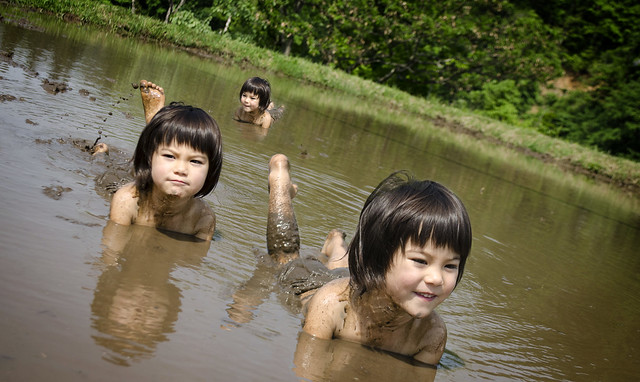
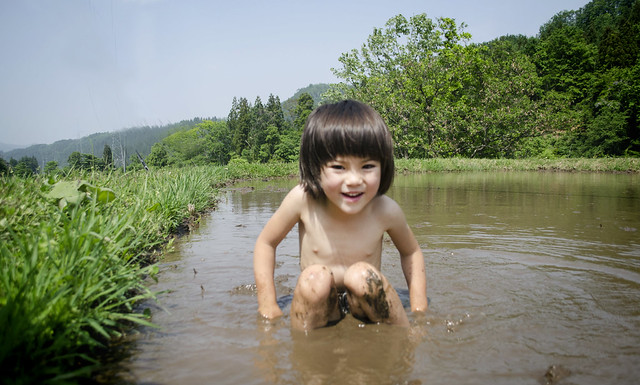
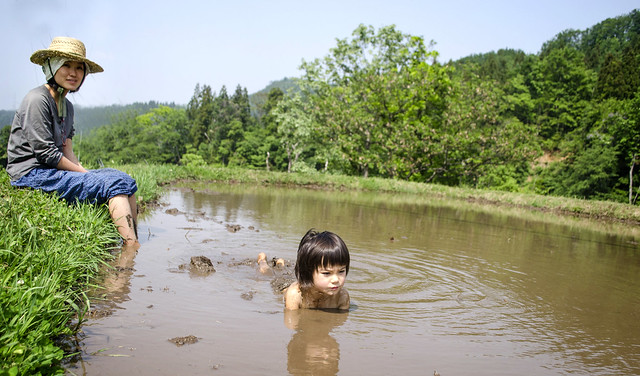
The pond is cleaned out and being prepared to serve as the summer chicken coop, since the only time we really need that much water is to melt snow in Winter, this year we will partition most of it off to give us a much welcome additional plot of land. Mona was a big help in scooping out a lot of the mud and debris that had accumulated since last spring.
The kame-mushi are out again today. These photos are after I had already opened the kitchen window once to let several hundred escape. Within a few minutes it looked like this again. Although I know they are edible, and actually gathered for food in some countries, and I even have the recipe for how to prepare them, I have yet to get the courage to take the next step.
Rice Bread & Kogomi
After the fire brigade opening festivities, I visited a friend who runs a great little “Farm Inn” – basically a regular house that is liscened to accept payment for room and board, but it is not on the same level as a Minshuku or Ryokan inn, which have much stricter regulations for kitchen and customer sleeping areas, etc. The system is to encourage tourism and cash flow to rural areas where the cost and general pain-in-the-buttness of trying to open a full-on inn is stifling.
Anyway, this is one of the best places to stay in the area – simple, cozy, and down to earth. I hate visiting though, because the land and house is everything I ever dreamed of having, and I can’t help comparing it to the tiny little boring plot of concrete we currently live on.
I plan to go back very soon, while the spring is still in progress, to spend a few hours photographing the surroundings in more detail, but for now I share the kogomi fiddle-head ferns that have started to poke up around his ponds. Given the two warm days in a row we had here, I am sure there are plenty coming up along the river behind our house, so today I will make some time to walk there with Mona.
There are several fern varieties that are regularly foraged in Japan, but this is my favorite simply because it is the easiest to eat – requiring no special treatment to remove the astringents such as zenmai or warabi. You can just pick the tender shoots and eat them raw, or better yet, boil it up and eat with sesame paste or oil. Cooking it with the rice is great too for a nice springy-looking steaming bowl of rice.
We will pick way more than can be eaten fresh though, so many of them will be dried, pickled, jarred, or misoed to preserve them for the long green-less winter.
Maybe Tomoe can put some into her soon-to-be famous Natural Yeast Whole-Grain Brown Rice bread. She has a small chain of shops in Tokyo that wants to sell it, as well as places here interested in selling goods made with local ingredients – and this is made with our and our neighbors rice. Her only obstacle now will be finding a way to bake enough to fill demand, as it is already a larger scale than she initially planned on starting out on, and she has also had some other big non-planned projects fall into her lap.
Luckily the village processing plant, which is extremely underutilized and available for any citizens of the village for a crazy-small fee, has state of the art equipment and two huge ovens that can bake as much as she can kneed.
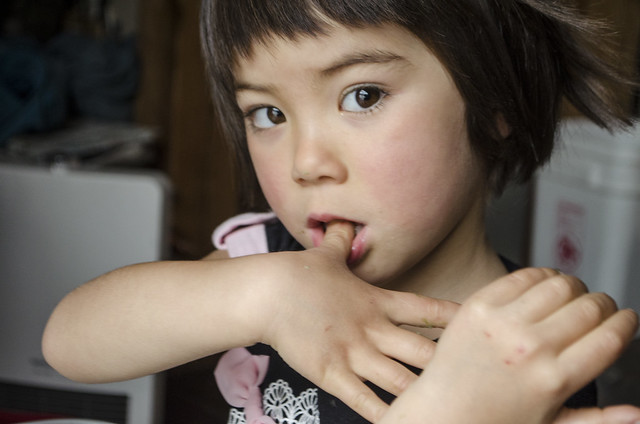
Here you can see the first use of what may be the trademark image for all of Tomoe’s products – Mona’s Itadakimasu face.
Japan’s most extreme skateboard park
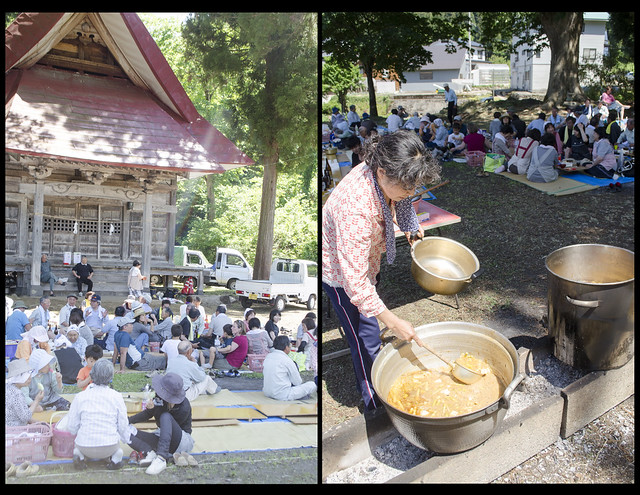
I have been trying to post much more frequently, and with photos from that day or the day before. I find myself looking back at past years on my blog to see what was happening then, and with my memory beginning to fail, I thought I really need to keep better records. Of course, this means I have to post about boring things like the opening ceremony of the fire-brigade this year. It is really hard trying to come up with photos that don’t look exactly like the photos of the previous twenty events I have lugged my camera to.

Last year fire brigade ceremonial activity was canceled because of the earth-quake. Which is a lame segway into the first photo of one of my favorite bridges in the village (without it I loose one of my favorite easy biking roads) that was damaged in the quake, and then this winter collapsed under the weight of the snow. I have suggested to the village tourism office that they market it as Japan’s most extreme skateboard park.
Spring
I feel like I can finally say that Spring is here. Today was amazing – aside from knowing that I *should* have been sitting diligently behind the computer doing grown-up work, I was out much of the day enjoying the first real non-wintery day in over five months.


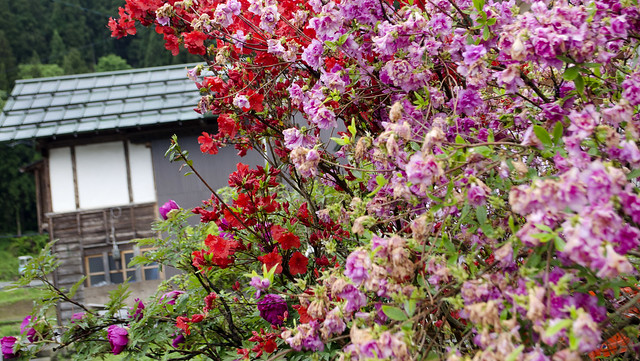
As you can see the cherry blossoms have started blooming now. Unlike Tokyo there is no one sitting around getting drunk under them to enjoy their transient beauty. Instead, the neighbors were all out in full farm-ninja garb.
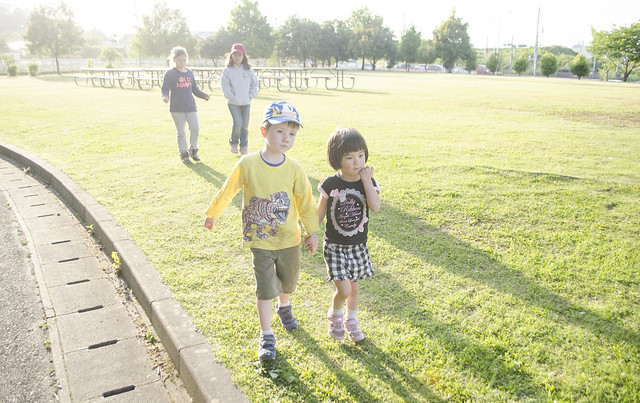
Mona, on the other hand, took advantage of the warm weather to shed the winter clothes. Here she can be seen playing in her bath/pool, and helping mom boil up some water for the kiriboshi-daikon (dried daikon) made from the stash of daikon we dug up the other day. It took her all day to cook and shred for drying. The neighbors didn’t even bat an eye when Mona went over to play. Either they are mellowing out, or just gave up on trying to teach us proper child-rearing etiquette.
The kame-mushi (stink bugs) were all out in droves to greet the warm spring weather. In the photo you can see the bugs gathering on the kitchen window – and this was well before the majority of them started to wake up.
Daily Mona
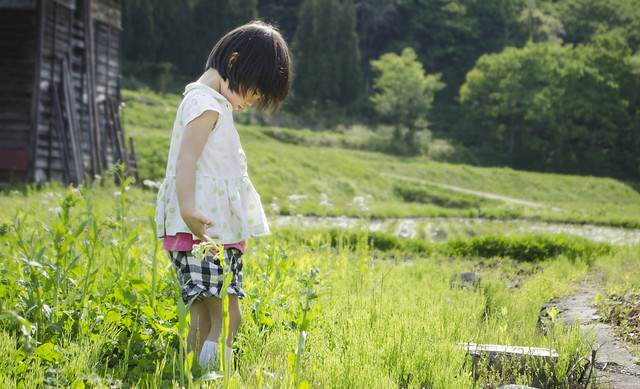
Mona takes a break while gathering sugina, the the green sterile stems of horsetail. Most of the fertile horsetail that she was gathering earlier in the month has already shed its pollen to the breeze, and don’t make such a nice snack anymore. The green stems are not so tasty, but supposed to be rich in calcium, and completely edible.
First day in the field – Preserved daikon
We spent our first real time this year out in the back garden doing something other than shoveling. Well, at least Tomoe was doing something other than shoveling. She spent a few hours digging out a pile of daikon from where we had buried them five months ago. The dirt and snow cover kept it insulated enough that nothing froze, so they were in pretty much perfect condition when we dug them out. The biggest difference is that they are much sweeter now. The sugi cedar leaves are placed on them to keep the moles and mice away.
While Tomoe was getting her hands dirty, I was still moving the meter-deep snow that is right were we want to make this year’s compost heap, and we have two big buckets of kitchen waste and other compostables saved up in the garage from winter that will start to stink soon now that the weather is warming. I didn’t quite make it all the way to the dirt, but far enough that the evening rain that has started falling should melt away the last of the white stuff.